Legal assistance and resources for an L1 intracompany transfer visa
Everything You Required to Know Concerning the L1 Intracompany Transfer Visa: A Comprehensive Overview
The L1 Intracompany Transfer Visa acts as an important mechanism for multinational companies looking to rearrange key workers within their U.S. procedures. With unique groups tailored for supervisors and specialized knowledge employees, this visa offers different chances. However, steering its intricacies calls for an understanding of qualification requirements and prospective obstacles. As firms consider this pathway, they need to evaluate the advantages versus the difficulties that may develop in the application process.
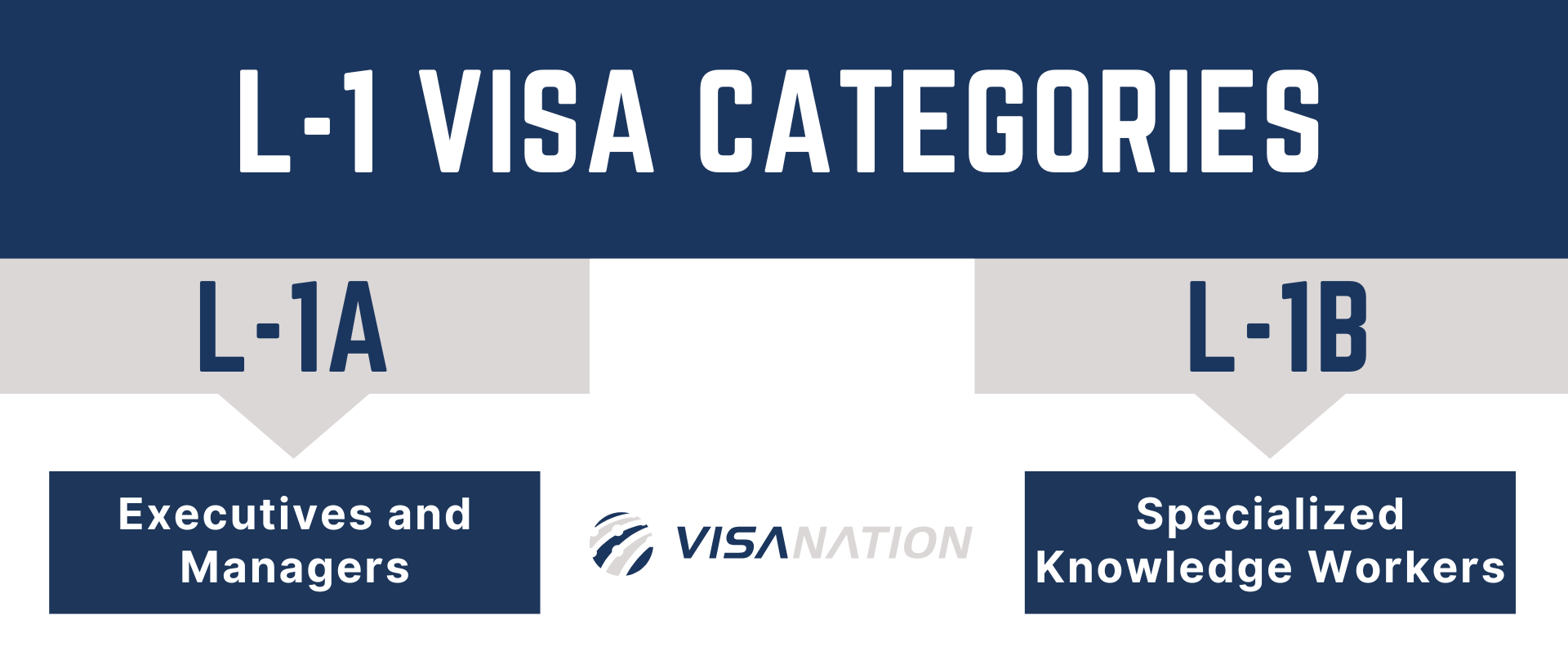
Understanding the L1 Visa Kind: L1A vs. L1B
When steering with the intricacies of the L1 visa, it is important to comprehend the distinctions between both main categories: L1A and L1B. The L1A visa is assigned for managers and execs that are moving within a company to a united state office. This category permits a much longer period of remain, with an initial period of 3 years, extendable up to seven years. In contrast, the L1B visa is intended for employees with specialized understanding that are likewise transferring to a united state branch. The L1B visa has a shorter first stay of 3 years, with expansions feasible up to five years. Both visa types satisfy of facilitating intracompany transfers, yet they cater to various functions within the corporate structure. Comprehending these differences is important for companies and employees seeking to navigate the L1 visa process efficiently.
Qualification Criteria for L1 Visa Applicants
The qualification criteria for L1 visa applicants are crucial for ensuring a smooth transfer procedure. To get an L1 visa, the applicant must have been employed by the foreign firm for at least one constant year within the last 3 years. Furthermore, the applicant must be going into the USA to function in a managerial, exec, or specialized understanding capacity.
For L1A visas, the emphasis is on supervisory and executive roles, while L1B visas accommodate those with specialized knowledge. The foreign and united state companies should have a certifying relationship, such as being parent companies, subsidiaries, associates, or branches.
Moreover, the united state company must be functional and able to support the candidate's role. It is vital for applicants to supply sufficient documents, demonstrating their eligibility and the firm's framework, to assist in the authorization procedure.
Benefits of the L1 Intracompany Transfer Visa
One of the main advantages of the L1 intracompany transfer visa is its capability to assist in smooth global flexibility for workers within multinational firms. This visa enables firms to transfer supervisors, executives, and specialized expertise employees to their U.S. offices with family member simplicity. Furthermore, the L1 visa typically provides a longer period of stay compared to other nonimmigrant job visas, with preliminary durations of up to 3 years that can be extended.
One more substantial advantage is the opportunity of twin intent, suggesting that L1 visa owners can request irreversible residency while maintaining their nonimmigrant standing. The L1 visa does not need a labor certification, which can improve the procedure for companies. This adaptability and performance make the L1 visa an eye-catching option for companies seeking to enhance their international procedures and utilize ability throughout boundaries.
The Application Refine for L1 Visas
Navigating the application process for L1 visas calls for mindful preparation and focus to detail, especially provided the benefits outlined previously. The procedure starts with the company declaring Kind I-129, the Application for a Nonimmigrant Employee, which have to consist of essential paperwork verifying the relationship between the united state and foreign entities. This paperwork typically consists of proof of work, company framework, and the applicant's credentials.
When the request is authorized, the employee may use for the L1 visa at a united state consular office or embassy, giving additional paperwork, consisting of the authorization notice and a legitimate key. It is essential for the applicant to plan for their visa interview, as consular policemans will examine their qualification based upon the sent details.
Prompt entries and adherence to standards substantially boost the possibilities of a successful application, making certain that both the worker and the company can take advantage of this crucial migration path.
Usual Challenges and Limitations of the L1 Visa
What obstacles might applicants face when going across the Recommended Site L1 visa process? One significant challenge is the need to demonstrate that the candidate has been employed with the international business for a minimum of one constant year within the preceding three years. This can complicate issues for employees that just recently moved to the moms and dad company or those with learn this here now varying employment backgrounds. In addition, the L1 visa undergoes strict analysis by united state Citizenship and Migration Services (USCIS), which can cause delays or denials if documentation is not enough or unclear.
An additional constraint entails the lack of ability to switch employers; L1 visa holders must remain with the funding company. The L1 visa is a short-lived remedy, commonly legitimate for one to 3 years, which might not straighten with a candidate's lasting residency objectives. Maneuvering via these difficulties calls for cautious planning and extensive preparation.
Often Asked Concerns
Can My Family Members Accompany Me on an L1 Visa?
Yes, an L1 visa owner can have their immediate family accompany them - L1 intracompany transfer visa. Partners and youngsters under 21 may make an application for L2 visas, permitting them to study and live in the United States along with the L1 visa owner
The Length Of Time Can I Remain On an L1 Visa?
An L1 visa holder can originally remain for as much as 3 years. This period may be expanded, with L1A visa owners qualified for a maximum of 7 years and L1B owners for five years in overall.
Is There a Restriction on L1 Visa Renewals?
There is no particular restriction on L1 visa revivals; nevertheless, the total period of keep is topped. L1A owners can remain for an optimum of seven years, while L1B owners are limited to five years.
Can I Switch Jobs While on an L1 Visa?
Switching work while on an L1 visa is typically not permitted. The visa is employer-specific, needing the specific to preserve employment with the funding company, unless they obtain a brand-new visa under a different company.
What Takes place if My L1 Visa Is Denied?
The candidate might obtain a rejection notice outlining the reasons if an L1 visa is rejected. They can appeal the decision, reapply with more powerful evidence, or discover alternative visa alternatives for entry
The L1 Intracompany Transfer Visa offers as an essential device for international firms looking to rearrange vital personnel within their go to my site U.S. operations. To qualify for an L1 visa, the applicant has to have been utilized by the international firm for at the very least one constant year within the last three years. For L1A visas, the emphasis is on managerial and executive functions, while L1B visas cater to those with specialized understanding. The L1 visa is a temporary remedy, commonly legitimate for one to 3 years, which may not line up with an applicant's long-term residency objectives. An L1 visa holder can originally stay for up to three years.